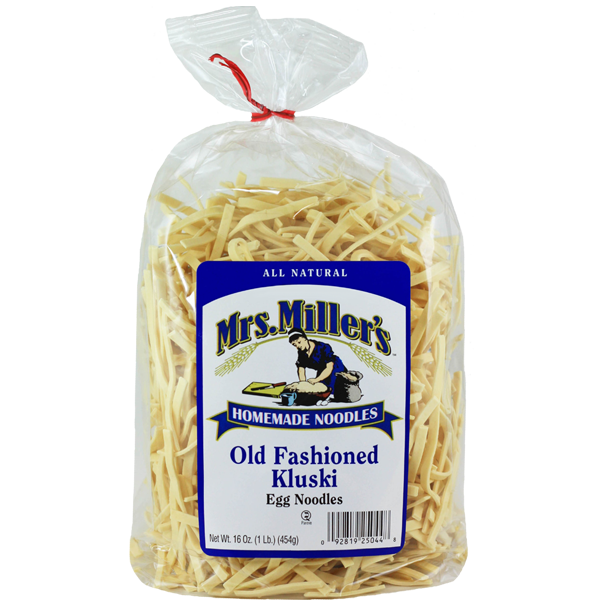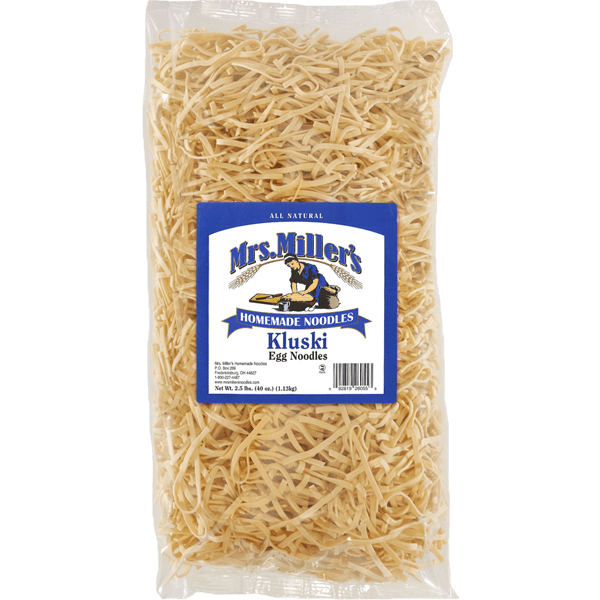
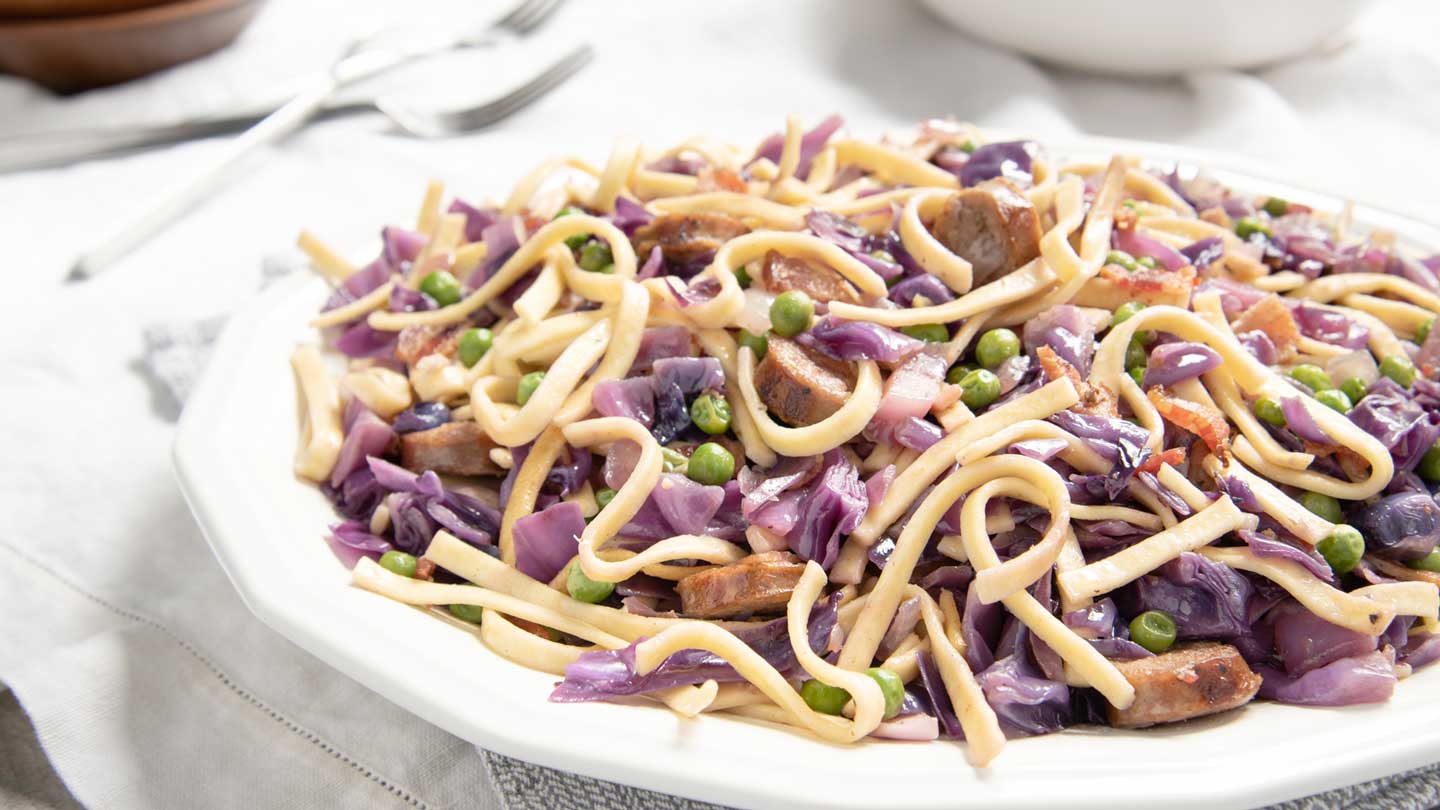
Ask ten people what makes a noodle kluski and you’ll get ten answers. The short version: it’s the cut and the thickness, not a different dough. Kluski are rolled thicker than a standard egg noodle and cut short, which gives them the chew they’re known for.
What makes them different
A wide noodle is rolled thin and cut long. Kluski go the other way. That extra thickness means they take a little longer to cook and they don’t break down when they sit in liquid, which is why they turn up in stews and goulash rather than delicate soups.
What to make with them
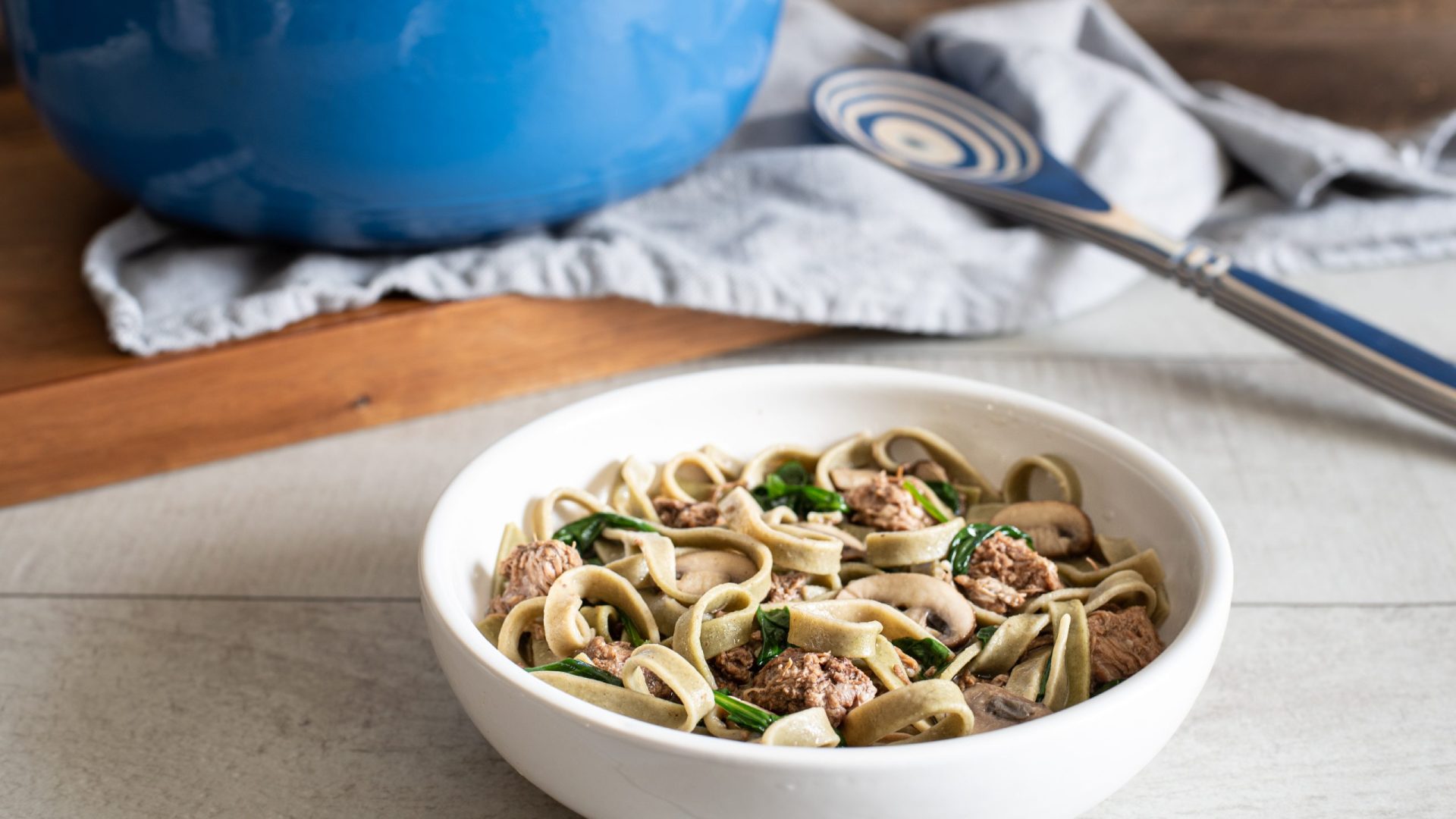
Kluski belong in dishes with something heavy to stand up to. Beef and noodles. Cabbage and butter. Anything that has been on the stove a while. They’re not the noodle for a light broth, and they’re not trying to be.
If you can’t find them
A wide egg noodle is the closest swap. You’ll lose some of the chew, and the dish will read a little lighter, but it works.
Key takeaways
- Kluski are short, thick egg noodles with a firm bite.
- The style is Polish in origin and common through Ohio and Pennsylvania.
- They hold their shape in stews, goulash, and anything slow-cooked.
- Substitute a wide noodle if you want the closest match.